Useful Exercises After Delivery A Complete Guide to Faster Postpartum Recovery
Bringing a new baby into the world is an incredible experience, but your body also needs time to recover after childbirth. Pregnancy and delivery place extra stress on your muscles, joints, and pelvic floor. During the postpartum period, gentle exercises can help improve strength, restore flexibility, and make everyday activities more comfortable.
Starting with the right exercises after delivery can also improve circulation, reduce stiffness, strengthen your core, and support your overall recovery. The key is to begin with simple movements and gradually increase activity as your body heals.
This guide explains some of the most useful exercises after delivery, their benefits, and how they can help you recover safely.
Why Exercise After Delivery Is Important
Postpartum exercises are designed to help your body recover gradually after childbirth. They focus on rebuilding muscle strength, improving posture, and restoring mobility without placing unnecessary strain on healing tissues.
Postpartum exercise strengthens the abdominal muscles, supports pelvic floor recovery, reduces lower back pain, improves blood circulation, enhances flexibility, promotes better posture, increases energy levels, helps reduce muscle stiffness, and supports emotional well-being. Practicing these exercises consistently can make daily activities more comfortable while improving your overall physical recoveryWhen Can You Start Exercising After Delivery?
Every woman’s recovery is different. The right time to begin exercising depends on factors such as the type of delivery, your overall health, and how your body is healing.
Begin with gentle movements and gradually increase activity as you become stronger. If you experience pain, excessive bleeding, or unusual discomfort, stop exercising and seek medical advice.
Understanding Postpartum Recovery
Your body undergoes significant physical and hormonal changes after childbirth. The uterus gradually returns to its normal size, abdominal muscles begin healing, and pelvic floor tissues recover from the stress of pregnancy and delivery. Hormonal changes may also affect your energy levels, mood, and overall well-being during the postpartum period.
Gentle postpartum exercises support these natural healing processes by improving blood circulation, restoring muscle strength, enhancing flexibility, and promoting better posture. Combined with proper nutrition, hydration, and adequate rest, regular movement can help you recover more comfortably and gradually regain confidence in your daily activities.
Week-by-Week Recovery Exercises
The exercise chart is organized into Week 1, Week 2, and Week 3, beginning with breathing and gentle mobility exercises before progressing to leg and core-strengthening movements.
Week 1 Exercises
During the first week, focus on improving breathing, posture, and gentle muscle activation.
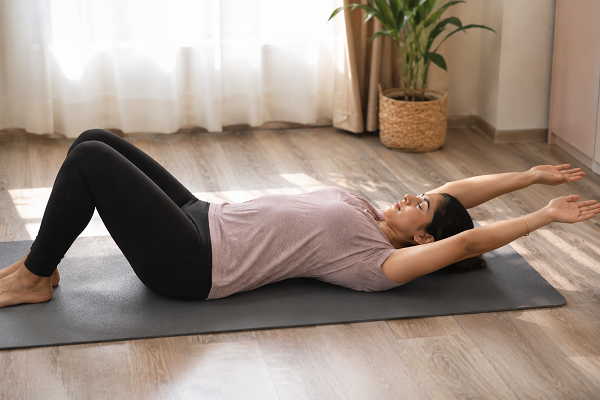
1. Abdominal Breathing

Deep breathing activates the abdominal muscles while helping the body relax. It improves oxygen supply, activates deep core muscles, reduces stress, and supports abdominal recovery. To perform this exercise, stand or lie comfortably, take a slow deep breath through your nose, allow your abdomen to expand, and exhale slowly while gently tightening your abdominal muscles. Repeat this movement several times while maintaining slow and controlled breathing.
2. Arm Raising Exercise
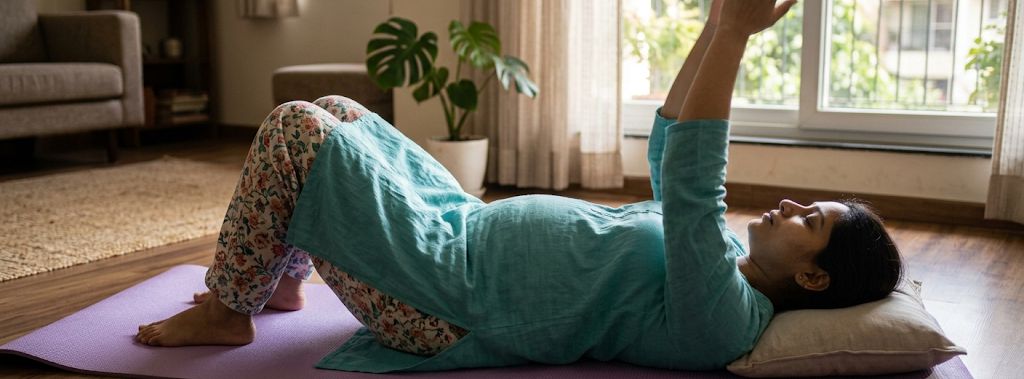
This movement improves flexibility in the shoulders and upper back. It enhances shoulder mobility, relieves stiffness, and promotes better posture. Lie comfortably on your back, slowly raise both arms overhead, then lower them with control. Repeat the movement several times without rushing.
3. Neck Stretch
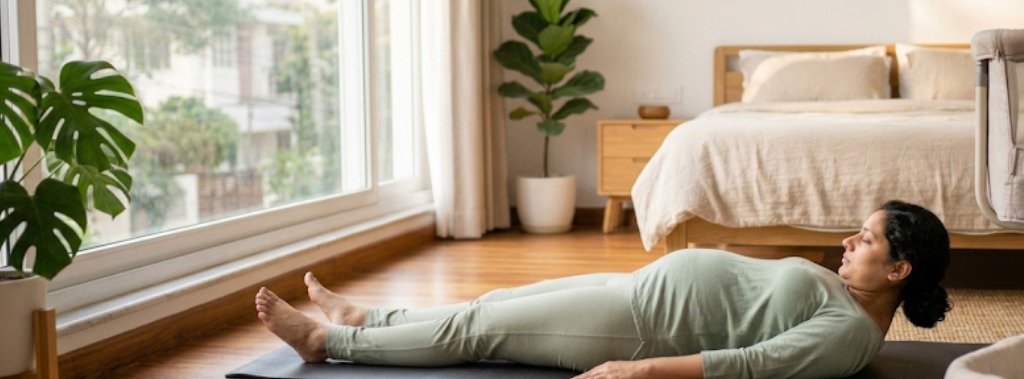
Neck stretches help reduce stiffness caused by prolonged feeding and carrying your baby. This exercise relieves neck tension, improves flexibility, and reduces muscle tightness. Sit or lie comfortably, slowly lower your chin toward your chest, hold the position briefly, and then return to the starting position before repeating the movement.
4. Pelvic Tilt Exercise
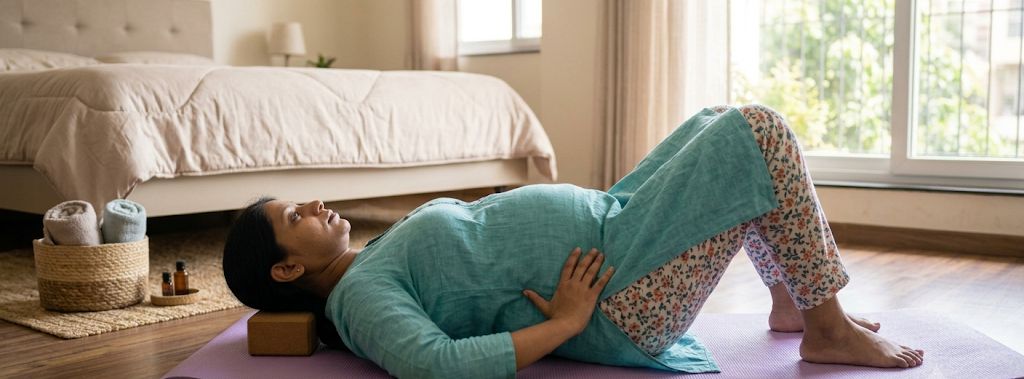
Pelvic tilts gently strengthen the lower back and abdominal muscles. They improve core stability, support pelvic alignment, and help reduce back discomfort. Lie on your back with your knees bent, tighten your abdominal muscles, gently flatten your lower back against the floor, hold for a few seconds, and then relax before repeating the exercise.
Week 2 Exercises
As your recovery progresses, you can gradually introduce lower-body strengthening exercises.
5. Leg Raising Exercise
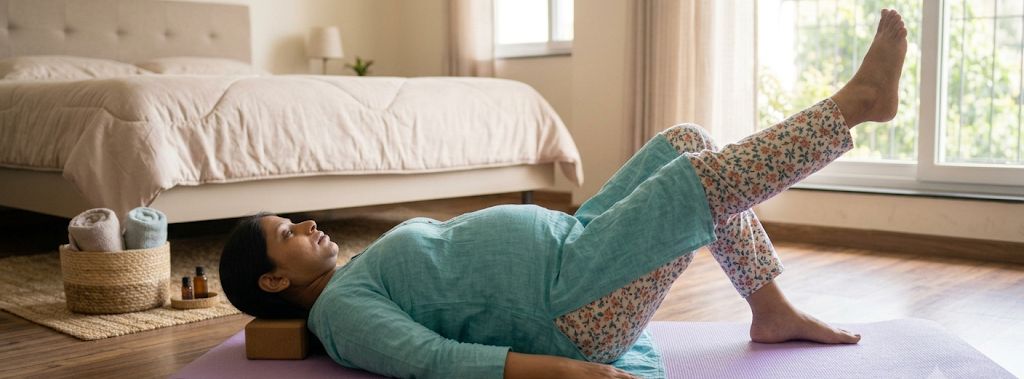
Leg raises strengthen the hips and thighs while improving flexibility. They improve hip mobility, strengthen leg muscles, and support balance. Lie flat on your back, slowly raise one leg, lower it gently, and repeat the same movement with the opposite leg.
6. Heel-to-Buttock Exercise
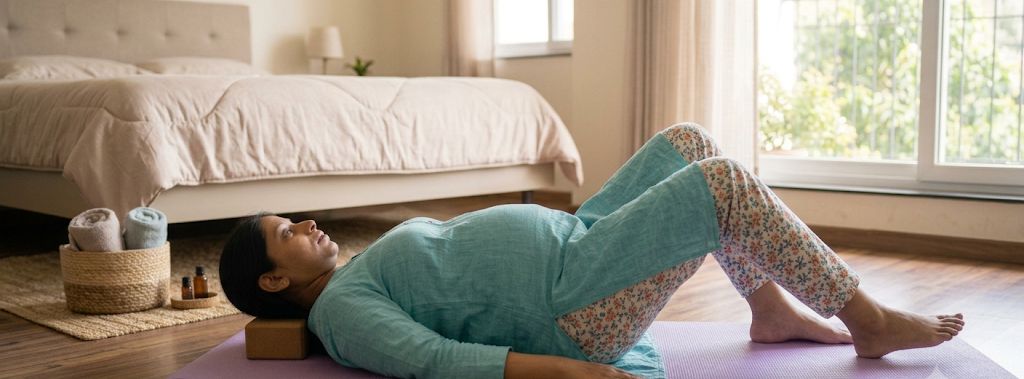
This exercise improves flexibility in the hips and knees while strengthening the muscles of the lower body. It enhances mobility, supports joint movement, and improves flexibility. Lie comfortably, slowly slide one heel toward your body, return to the starting position, and repeat on both sides.
Week 3 Exercises
Once you feel stronger, gentle core-strengthening exercises may be introduced.
7. Double Leg Raise
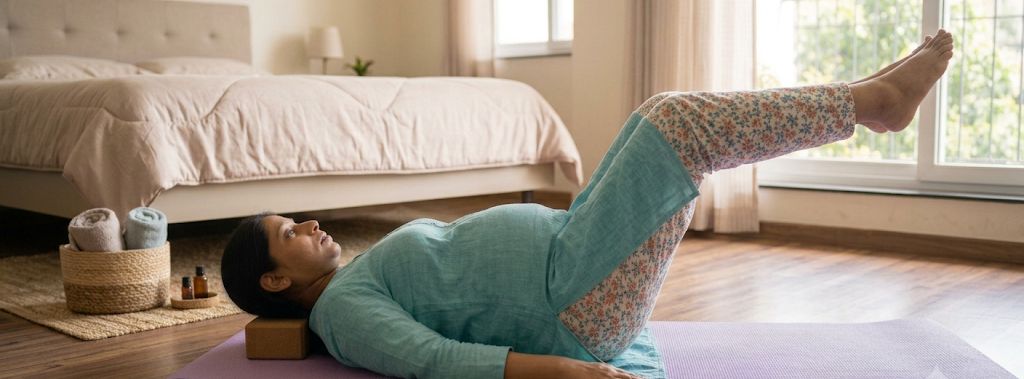
This movement strengthens the abdominal muscles and improves stability. It builds core strength, improves muscle coordination, and supports better posture. Lie on your back, slowly raise both legs together, and lower them carefully while maintaining full control throughout the movement.
8. Gentle Sit-Up
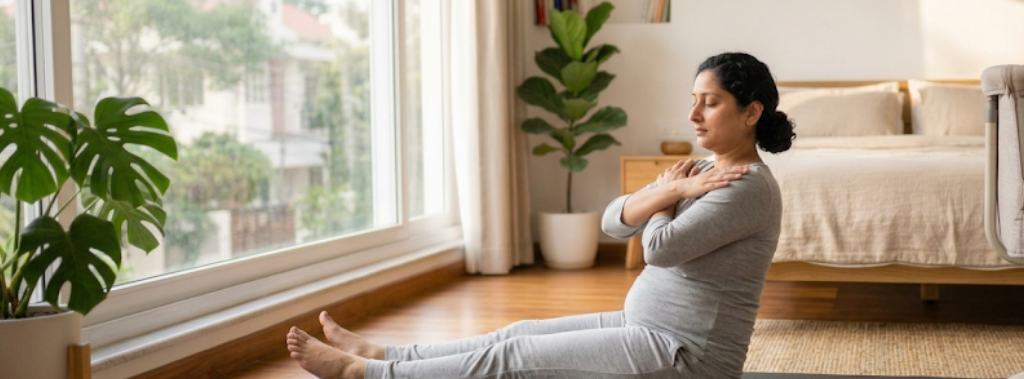
A beginner sit-up helps rebuild abdominal strength during the later stages of recovery. It strengthens the core, improves balance, and supports everyday movement. Lie comfortably, slowly lift your shoulders using your abdominal muscles, and gently return to the starting position before repeating the exercise.
Walking After Delivery
Walking is one of the easiest and safest ways to begin moving after childbirth. It is a low-impact activity that gently improves circulation, boosts energy levels, reduces muscle stiffness, and supports both physical and emotional well-being.
Start with short walks of 10–15 minutes at a comfortable pace. As your strength and endurance improve, gradually increase the duration and distance. Walking regularly can also help improve posture, strengthen the lower body, and make daily activities easier during the postpartum recovery period.
Breathing Exercises
Breathing exercises can be started soon after delivery, whether you have had a vaginal birth or a caesarean delivery, provided you are comfortable. Deep breathing improves lung expansion, enhances oxygen supply, promotes relaxation, and helps reduce stress and anxiety. It also supports gentle activation of the core muscles and encourages better circulation during the early stages of postpartum recovery.
Kegel Exercises
Kegel (pelvic floor) exercises can also be started soon after delivery, including after both vaginal birth and caesarean delivery, as long as you are comfortable and your healthcare provider has not advised otherwise. These exercises strengthen the pelvic floor muscles, improve bladder control, support pelvic organs, and reduce the risk of urinary incontinence. Begin with gentle contractions and gradually increase the duration and repetitions as your strength improves.
Weekly Exercise Plan
Week 3: Begin gentle core-strengthening exercises to improve stability and rebuild abdominal muscle strength, while continuing your walking, breathing, and pelvic floor exercises..
Week 1: Focus on breathing exercises, Kegel exercises, posture correction, and gentle mobility movements.
Week 2: Gradually introduce leg-strengthening exercises, flexibility training, while continuing breathing and Kegel exercises.
Safety Tips
Exercise should always be performed safely during postpartum recovery. Start slowly, stay hydrated, wear comfortable clothing, focus on proper breathing throughout every movement, avoid sudden or jerky motions, increase intensity gradually, and allow yourself adequate rest whenever your body feels tired. Listening to your body is one of the most important parts of postpartum recovery.
Common Mistakes to Avoid
Many new mothers try to return to their pre-pregnancy fitness routine too quickly. This can slow recovery and increase the risk of discomfort. Avoid high-impact workouts during the early recovery period, do not ignore pain or unusual discomfort, maintain proper posture while exercising, avoid holding your breath during movements, and never skip warm-up exercises before beginning your workout.
Nutrition Supports Recovery
Healthy nutrition is just as important as exercise during postpartum recovery. A balanced diet that includes lean protein, fresh fruits, vegetables, whole grains, healthy fats, and plenty of water helps repair muscles, restore energy, and support the body’s natural healing process after childbirth.
Signs You Should Stop Exercising
Stop your workout immediately if you experience heavy bleeding, severe pain, fever, chest pain, difficulty breathing, dizziness, or increasing pelvic pain. These symptoms should not be ignored and require prompt medical attention.
Frequently Asked Questions
1. Why are postpartum exercises important?
Postpartum exercises help rebuild strength, improve mobility, support pelvic floor recovery, reduce muscle stiffness, and promote overall physical recovery after childbirth.
2. Which exercise should I start with?
Gentle breathing exercises, neck stretches, arm raises, and pelvic tilts are commonly introduced first, as shown in the uploaded exercise guide.
3. Can exercise reduce back pain after delivery?
Yes. Strengthening the core muscles and improving posture can help reduce lower back discomfort during postpartum recovery.
4. How often should I exercise?
Start with short sessions and gradually increase the duration as your body becomes stronger and more comfortable with movement.
5. Are pelvic floor exercises beneficial?
Yes. Pelvic floor exercises strengthen the muscles that support the bladder, uterus, and bowel, making them an important part of postpartum recovery.
6. Can walking help during postpartum recovery?
Gentle walking is a simple and effective way to improve circulation, increase mobility, and support overall recovery after childbirth.
7. Should I exercise every day?
Light daily movement can be beneficial, but it is equally important to rest whenever your body needs recovery. Listen to your body’s signals and avoid overexertion.
8. When should I seek medical advice?
If you experience persistent pain, heavy bleeding, fever, dizziness, or any unusual symptoms, stop exercising and seek appropriate medical guidance.
Conclusion
Recovering after childbirth is a gradual journey, and regular gentle exercise can play an important role in helping your body regain strength and mobility. Beginning with breathing exercises and simple movements before progressing to leg and core-strengthening exercises can support a smoother recovery. The week-by-week progression shown in the exercise chart starts with gentle movements during the first week and gradually advances over the following weeks.
Remember that every mother’s recovery is unique. Be patient with your body, stay consistent with your routine, and combine regular movement with healthy nutrition, adequate hydration, and proper rest to support a healthier postpartum recovery.
Begin Your Postpartum Recovery with Expert Guidance
Recovering after childbirth is a personal journey, and every mother deserves the right support. Whether you have had a normal delivery or a cesarean section, following a safe recovery plan can help you regain strength and confidence.
If you have questions about postpartum healing, safe exercise routines, pelvic floor recovery, or post-delivery care, professional guidance can help you recover comfortably and safely.
Book your consultation with Dr. Punam Dixit to receive personalized postpartum care and expert support throughout your recovery journey